
Introduction
A well-chosen rug has the power to transform a room, adding warmth, texture, comfort, and personality. Yet, even the most beautiful rug can fail to create the desired impact if it’s styled incorrectly. Many homeowners unknowingly make common rug styling mistakes that can make spaces look smaller, disconnected, or unbalanced.
Whether you’re decorating a living room, bedroom, dining area, or hallway, avoiding these rug styling errors will help you create a cohesive and luxurious interior.
1. Choosing a Rug That’s Too Small
One of the most common rug mistakes is selecting a rug that is too small for the space.
A tiny rug floating in the center of a room can make furniture appear disconnected and the room feel unfinished.
What to Do Instead:
- In living rooms, ensure at least the front legs of all seating furniture sit on the rug.
- For larger rooms, place all furniture legs on the rug whenever possible.
- When in doubt, go larger rather than smaller.
2. Ignoring Furniture Placement
Many homeowners treat rugs as decorative accessories rather than foundational design elements.
Poor furniture placement can disrupt visual flow and make a room feel awkward.
What to Do Instead:
Create a furniture arrangement that feels anchored by the rug. The rug should connect key pieces within the space and define the conversation area.
3. Using the Wrong Rug Shape
Not every room suits a rectangular rug.
Using the wrong shape can throw off the balance of the space and make layouts feel forced.
What to Do Instead:
- Round rugs work beautifully beneath round dining tables.
- Runners are ideal for hallways, kitchens, and narrow spaces.
- Square rugs can complement square rooms and seating arrangements.
Choose a shape that mirrors your furniture layout and room dimensions.
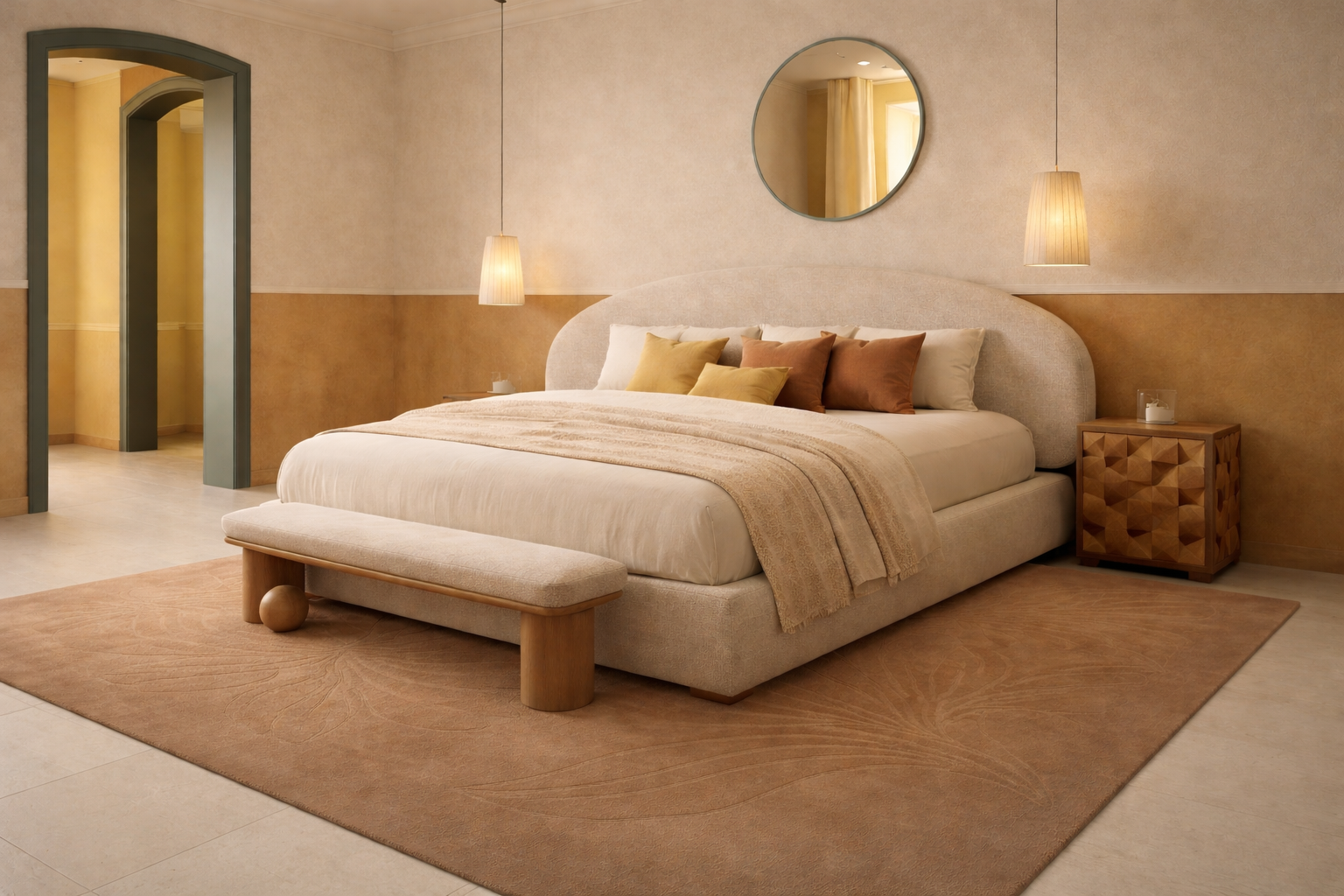
4. Overlooking Rug Proportions in the Bedroom
A rug that’s too small under a bed can make even a luxurious bedroom feel incomplete.
What to Do Instead:
The rug should extend at least 18–24 inches beyond the sides and foot of the bed.
For larger beds:
- Queen Bed: Consider an 8′ x 10′ rug.
- King Bed: A 9′ x 12′ rug often works best.
This creates a balanced look and provides a soft landing underfoot.
5. Choosing Style Over Function
A beautiful rug that doesn’t suit your lifestyle can quickly become a maintenance headache.
What to Do Instead:
Consider:
- Foot traffic levels
- Presence of pets
- Children in the home
- Cleaning requirements
High-traffic areas benefit from durable, easy-to-maintain materials, while delicate rugs can be reserved for low-traffic spaces.
6. Neglecting Rug Layering Techniques
Many homeowners avoid layering rugs because they fear it will look cluttered.
However, thoughtful layering adds depth, texture, and designer appeal.
What to Do Instead:
Try layering:
- A neutral jute rug beneath a patterned rug.
- A larger natural-fiber rug under a smaller statement piece.
- Contrasting textures to create visual interest.
Layering can make rooms feel richer and more curated.
7. Ignoring Color Balance
A rug occupies a significant amount of visual space. Choosing a color palette that clashes with existing décor can disrupt the entire room.
What to Do Instead:
Use your rug to:
- Complement existing furniture.
- Tie together accent colors.
- Add contrast without overwhelming the room.
Aim for harmony rather than exact matching.
8. Forgetting About Rug Pads
Many homeowners skip rug pads to save money, but this often leads to slipping, bunching, and faster wear.
What to Do Instead:
A quality rug pad:
- Prevents movement
- Protects flooring
- Extends rug lifespan
- Adds cushioning and comfort
It’s one of the smartest investments you can make for your rug.
9. Not Considering Room Traffic Flow
A rug should enhance movement through a room, not obstruct it.
Poor rug placement can create tripping hazards and make spaces feel cramped.
What to Do Instead:
Ensure walkways remain clear and that rugs don’t interfere with doors or natural traffic patterns.
Always view the room from multiple angles before finalizing placement.
10. Treating Rugs as an Afterthought
Many people purchase furniture first and choose a rug at the very end.
This often limits design options and results in a rug that feels disconnected from the overall aesthetic.
What to Do Instead:
Consider the rug early in the design process. Since it occupies a large visual footprint, it can serve as the foundation for the room’s color palette, texture story, and overall style.
 No products in the cart.