
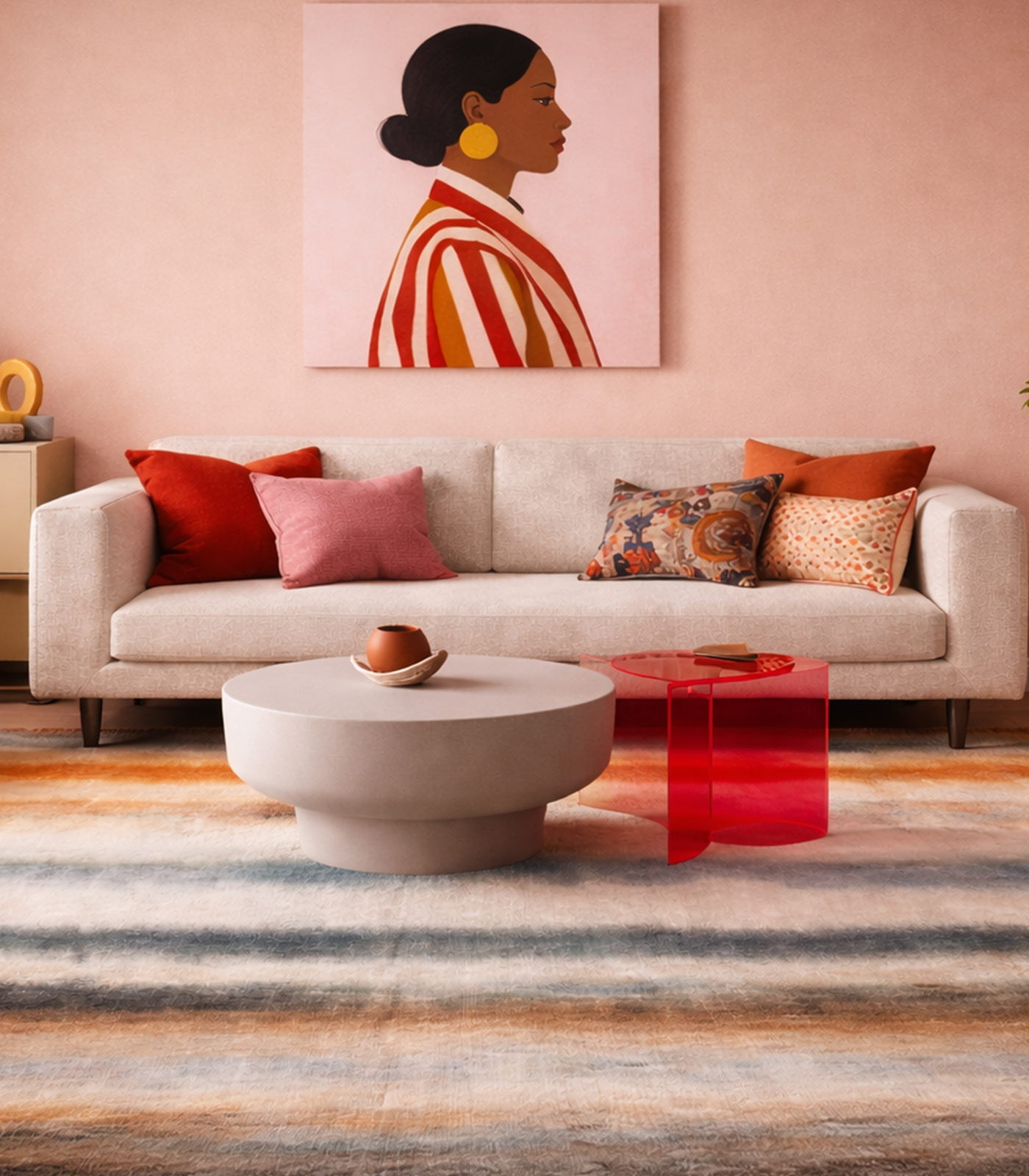
Choosing the right rug is only half the battle. Proper placement is what transforms a living room from looking unfinished to professionally designed. Interior designers use a few timeless rug placement principles that help create balance, comfort, and visual harmony.
In this guide, we’ll share the designer-approved rules for living room rug placement that work in almost every home.
Why Rug Placement Matters
A well-placed rug:
✔ Defines the seating area
✔ Makes the room feel larger
✔ Creates visual balance
✔ Adds warmth and comfort
✔ Ties furniture together
When a rug is too small or positioned incorrectly, even the most beautiful living room can feel disconnected.
Rule #1: Anchor the Seating Area
The rug should connect your furniture rather than float independently in the center of the room.
Ideal Placement
- Front legs of sofas and chairs should sit on the rug.
- The rug should visually unite all major seating pieces.
- Coffee tables should be centered on the rug.
Why Designers Love This Rule
It creates a cohesive conversation area and makes the room feel intentional and inviting.
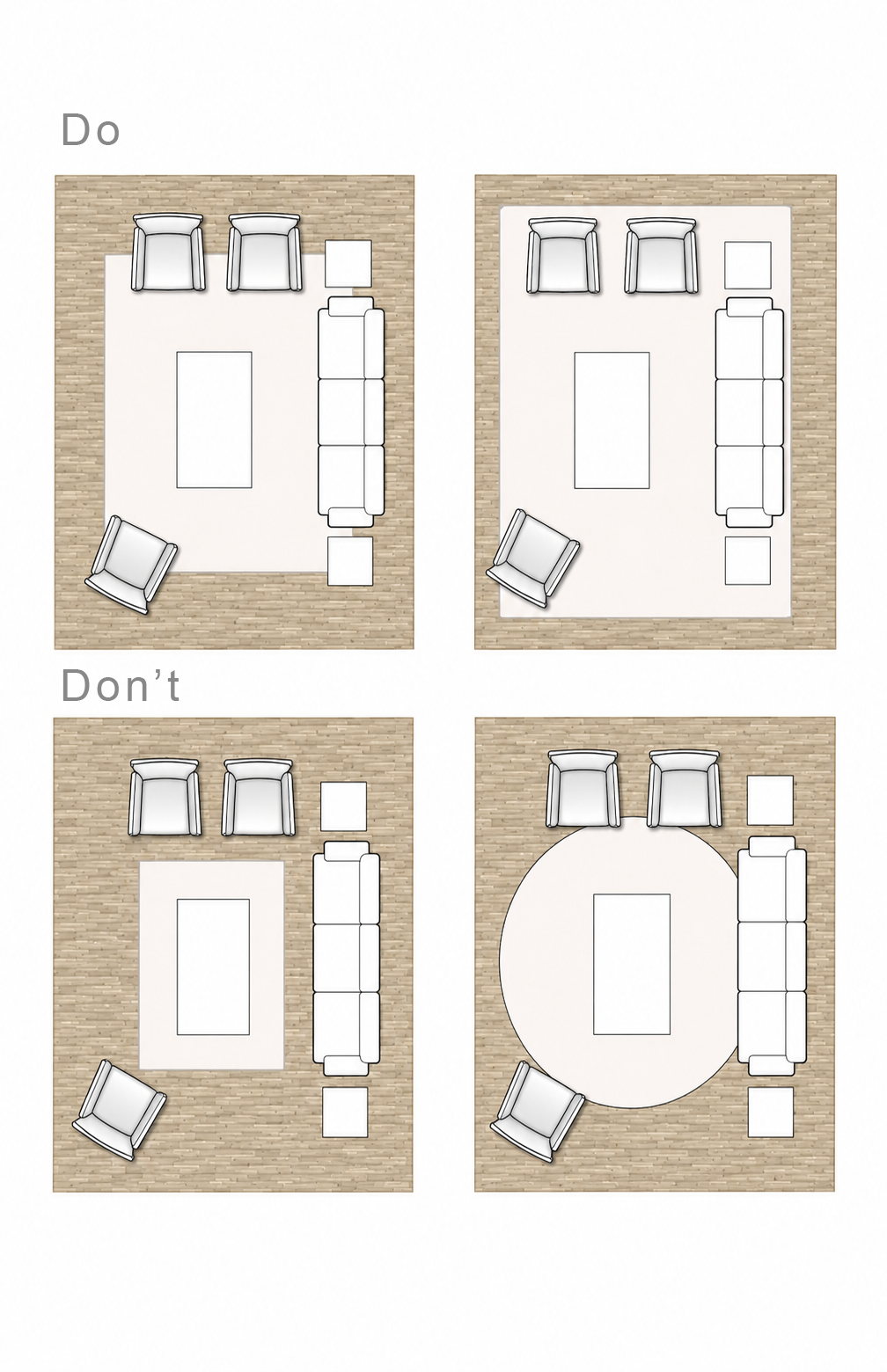
Rule #1: Anchor the Seating Area
The rug should connect your furniture rather than float independently in the center of the room.
Ideal Placement
- Front legs of sofas and chairs should sit on the rug.
- The rug should visually unite all major seating pieces.
- Coffee tables should be centered on the rug.
Why Designers Love This Rule
It creates a cohesive conversation area and makes the room feel intentional and inviting.
Rule #2: Bigger Is Usually Better
One of the most common decorating mistakes is purchasing a rug that’s too small.
Recommended Rug Sizes
| Room Size | Recommended Rug Size |
|---|---|
| Small Living Room | 5×8 ft or 6×9 ft |
| Medium Living Room | 8×10 ft |
| Large Living Room | 9×12 ft or larger |
A larger rug helps create a luxurious, spacious look.
Pro Tip
If you’re deciding between two sizes, choose the larger option.
Rule #3: Leave a Balanced Floor Border
A rug should not touch every wall.
Interior designers typically recommend leaving:
- 8–18 inches of visible flooring around the rug
- Consistent spacing on all sides
This creates a framed effect and improves visual balance.

Rule #4: Center the Rug Around Furniture, Not the Room
Many homeowners center the rug within the room dimensions.
Designers center the rug beneath the seating arrangement instead.
Your rug should act as the foundation for:
- Sofa
- Coffee table
- Accent chairs
- Side tables
This creates a natural focal point for the room.
Rule #5: Keep the Coffee Table Fully on the Rug
A coffee table should always sit completely on the rug.
Benefits include:
- Better visual balance
- Stronger furniture connection
- More cohesive styling
The coffee table acts as the centerpiece of the rug arrangement.
Rule #6: Define Open-Concept Spaces
In open floor plans, rugs help create distinct zones without walls.
For example:
Living Area
Use a large rug beneath the seating arrangement.
Dining Area
Use a separate rug under the dining table.
Reading Nook
Add a smaller accent rug.
This technique creates structure while maintaining openness.


Rule #7: Match the Rug Shape to the Room
Rectangular Rooms
Rectangular rugs generally work best.
Square Rooms
Square or oversized rectangular rugs often create symmetry.
Unusual Layouts
Layered rugs or custom-sized rugs can help accommodate awkward floor plans.
Choosing a rug shape that complements the room layout improves overall flow.
Rule #8: Layer Rugs for a Designer Look
Layering rugs adds texture and personality.
Popular combinations include:
- Jute rug + patterned wool rug
- Neutral rug + colorful accent rug
- Large flatweave rug + plush statement rug
Layering works particularly well in:
- Contemporary homes
- Bohemian interiors
- Scandinavian-inspired spaces
-
Common Rug Placement Mistakes
Choosing a Rug That’s Too Small
A small rug can make the entire room feel smaller and disconnected.
Leaving Furniture Completely Off the Rug
At least the front legs should touch the rug.
Ignoring Room Scale
The rug should match the size of the furniture arrangement.
Blocking Doorways
Ensure doors can open and close freely.
Centering the Rug Incorrectly
Always prioritize the furniture layout over the room’s exact center.
Quick Rug Placement Checklist
Before purchasing a rug, ask yourself:
✔ Does it anchor the seating area?
✔ Are the front legs of furniture on the rug?
✔ Is the coffee table fully on the rug?
✔ Is there 8–18 inches of visible flooring around the rug?
✔ Does the rug suit the room’s proportions?If the answer is yes, you’re likely making the right choice.
 No products in the cart.